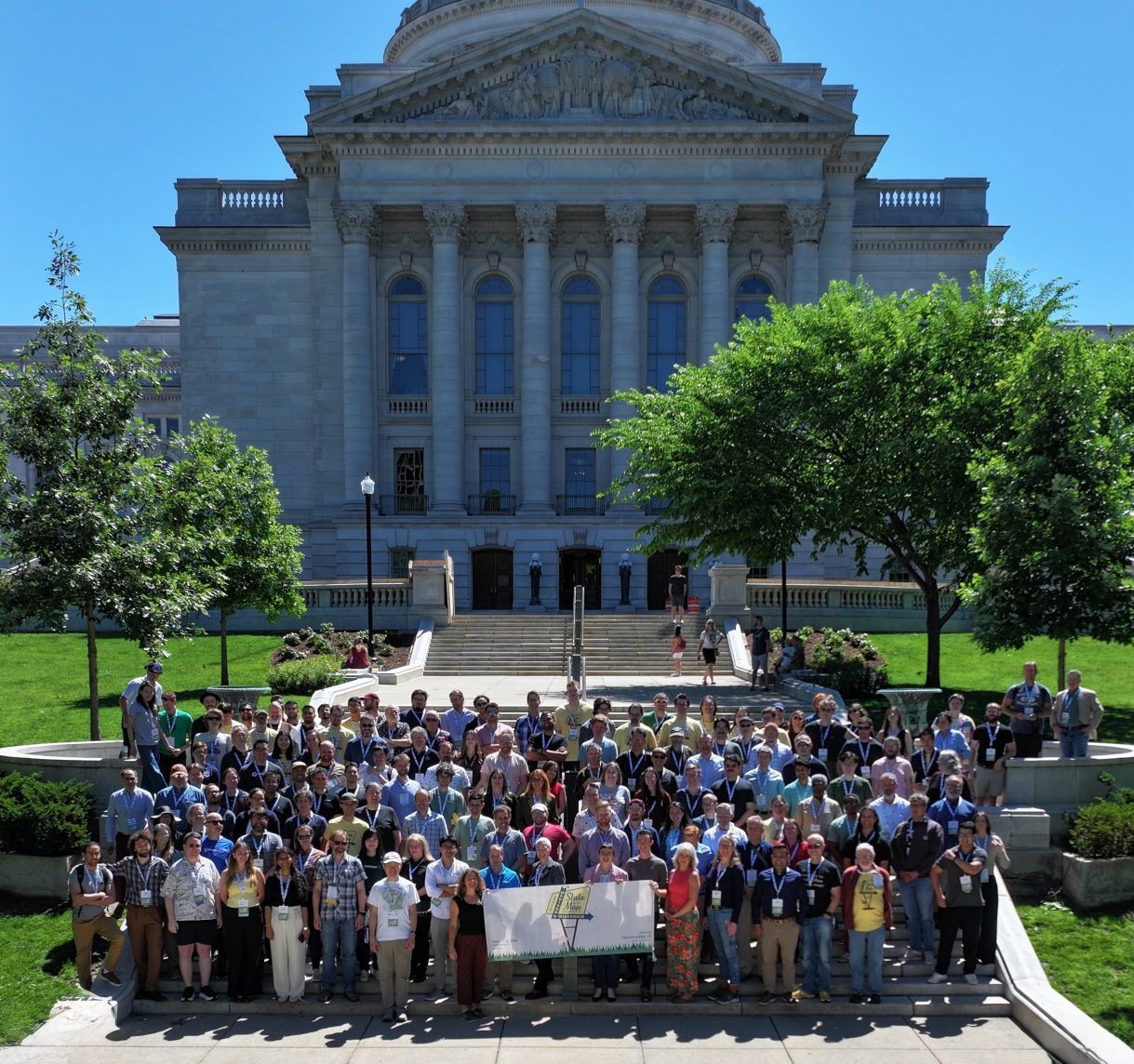
Our very own Vitor Vieira recently traveled to State of the Map US 2026, joining around 250 OpenStreetMap (OSM) enthusiasts, developers, and GIS professionals. Despite some rain on the first day, the sun came out for the rest of the event, perfectly matching the welcoming atmosphere inside.
While attendance was predominantly local to the US, the event delivered deep community and technical insights. Here is a look at our key takeaways and market observations.
As open-source core developers, we found the unique position of open-source tools in the US market particularly fascinating:
Vitor presented Mergin Maps, our open-source field data collection and collaboration platform built on QGIS, to a crowd of 50 attendees. He demonstrated how Mergin Maps bridges the gap between desktop GIS and the field, combining QGIS survey design with an intuitive mobile app and a cloud-syncing server backend. He also demonstrated a streamlined workflow using Mergin Maps for OSM contributors to capture field data, clean it in QGIS and seamlessly contribute it back to OpenStreetMap with JOSM.
(Note: This session was recorded, and we will share the link as soon as it is released!)
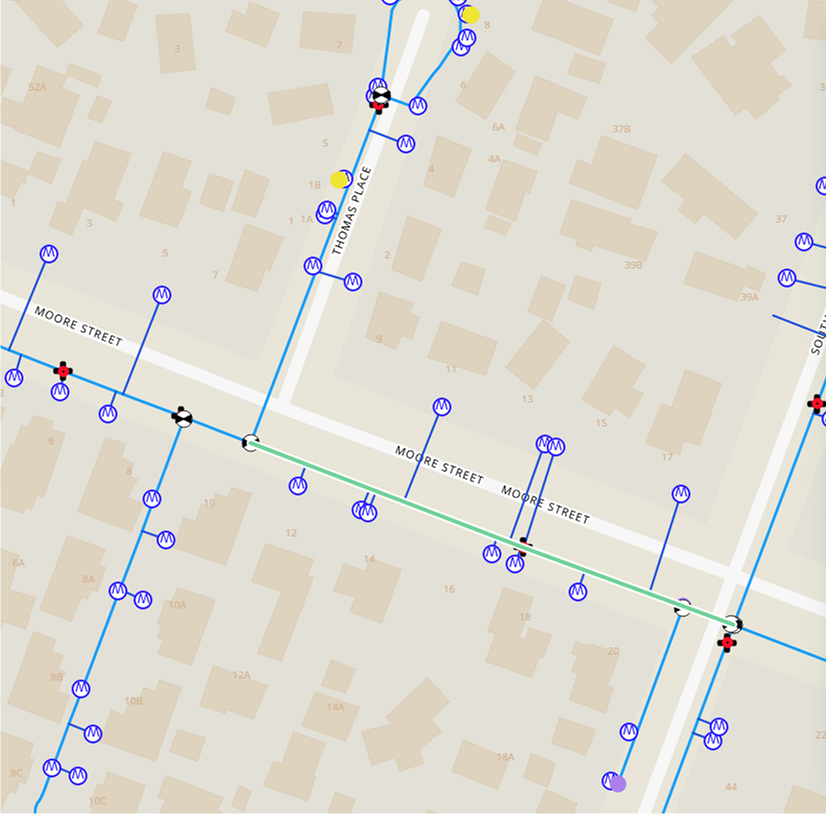
Among other interesting presentations, two caught our attention, highlighting both the underlying infrastructure of open-source mapping and a GIS practical application:
If there was one defining feature of State of the Map US 2026, it was the sense of community. The event was highly interactive, open and collaborative. "I walked away from the conference feeling like I knew everyone there," says Vitor.
As the conference unfolded, whatever distance there was between attendees seemed to fade, a feeling captured when many of us gathered to watch a FIFA World Cup match.
A massive thank you to the organizers, especially Matt and Maggie, whose passion and hard work created a uniquely welcoming environment. We left inspired, energized, and looking forward to the next one!
Let's make the QGIS work for you
Lutra Consulting is a QGIS-focused expert provider of geospatial software development, consulting, training, and support services.